
Question 1: What are the common materials for hollow fiber membranes, and what are their characteristics?
In industrial water treatment, wastewater reuse, and seawater reverse osmosis pretreatment, the three mainstream membrane materials are:
- PVDF (Polyvinylidene fluoride) – Currently the most widely used. Decent overall performance and moderate price.
- PES (Polyethersulfone) – Good hydrophilicity but poor chlorine resistance. Mainly used in food, beverage, and pharmaceutical applications.
- ePTFE (Expanded polytetrafluoroethylene) – The highest performance: chemically inert, high temperature resistance, and outstanding oxidant tolerance. Higher cost.
Many customers initially choose PVDF simply because “everyone uses it”. But after one or two years of operation, problems start to appear.
Question 2: What are the real disadvantages of PVDF and PES? Why does my membrane fail after only two years?
This is not your imagination – it is a fundamental material limitation.
Main issues with PVDF:
- Poor long-term chlorine tolerance – Manufacturers may claim “resistance to 2000 ppm sodium hypochlorite”, but that is for intermittent contact. In real operation, frequent chlorination cleaning (1–2 times per week) degrades the PVDF polymer chains, creates micro-cracks on the surface, and washes away hydrophilic modifications.
- Moderate alkali resistance – Prolonged exposure to high pH (>12) causes discoloration and embrittlement.
- Decreasing mechanical strength – Repeated chemical cleaning reduces tensile strength and elongation at break, leading to fiber breakage.
PES has even more serious limitations:
- No chlorine tolerance at all – Even a few tens of ppm of residual chlorine can rapidly age PES membranes and cause flux collapse.
- Narrow application window – Only suitable for non‑chlorinated, low‑oxidant streams.
That is why many water treatment plants report that PVDF modules must be completely replaced every 2–3 years, and PES may fail within one year. This is not an operational mistake – it is material destiny.
Question 3: Is there a better material than PVDF? What is the best hollow fiber membrane material?
Yes. Among all polymeric membrane materials, ePTFE sits at the top of the pyramid.
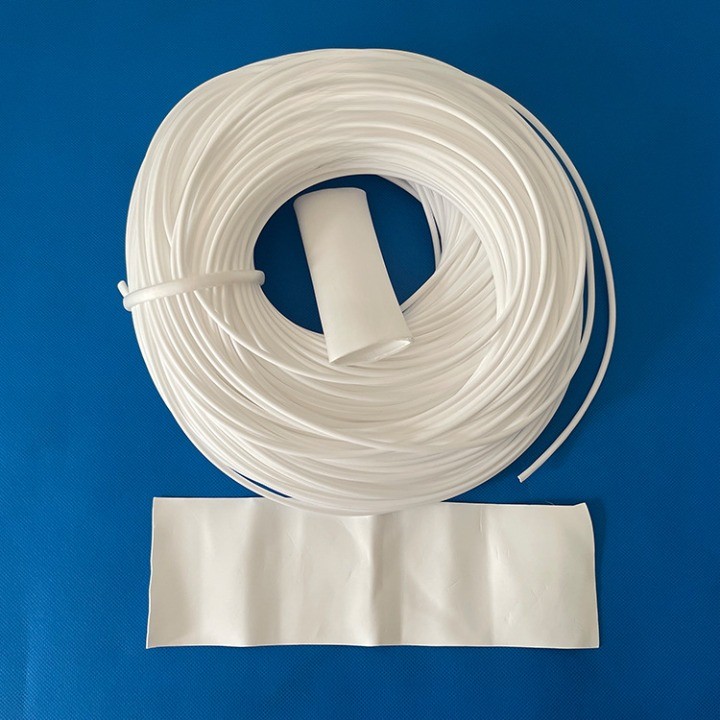
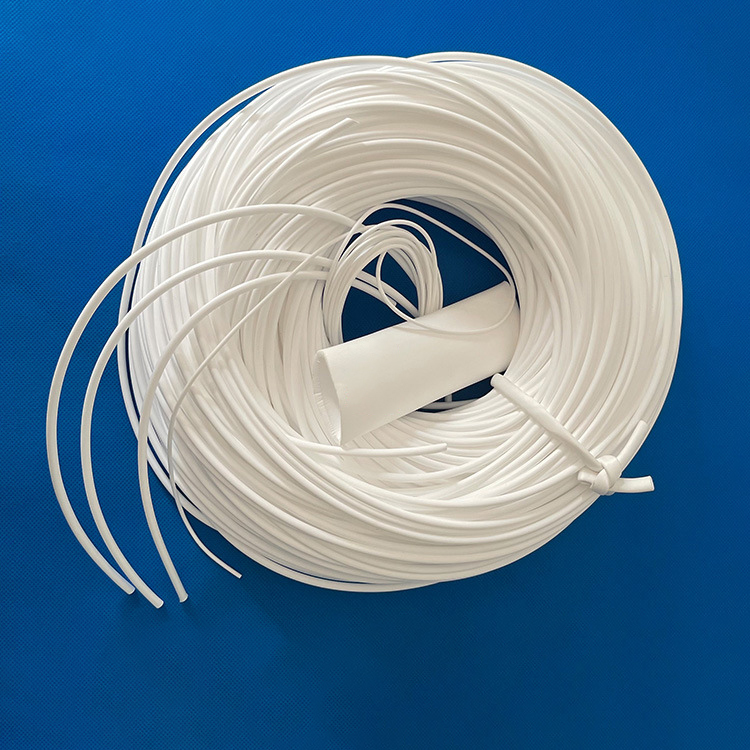
ePTFE (expanded PTFE) is a special form of PTFE, processed by bi‑axial stretching to create a microporous structure. Its core advantages:
- Chemical inertness – Withstands pH 0–14, any concentration of chlorine, hypochlorite, ozone, hydrogen peroxide, strong acids and strong alkalis – no reaction at all.
- Extremely wide temperature range – -200°C to +260°C. High‑temperature cleaning is effortless.
- Low fouling tendency – Very low surface energy makes it harder for contaminants to adhere; backwashing restores flux more easily.
- Mechanical stability – Survives repeated chemical cleaning + backwashing + air scouring without embrittlement for a decade.
If you ask for the “best” from a pure performance standpoint, ePTFE is the best hollow fiber membrane material available today. Its only drawback is a higher raw material cost than PVDF.
Question 4: Can you provide a real data comparison between PVDF and ePTFE?
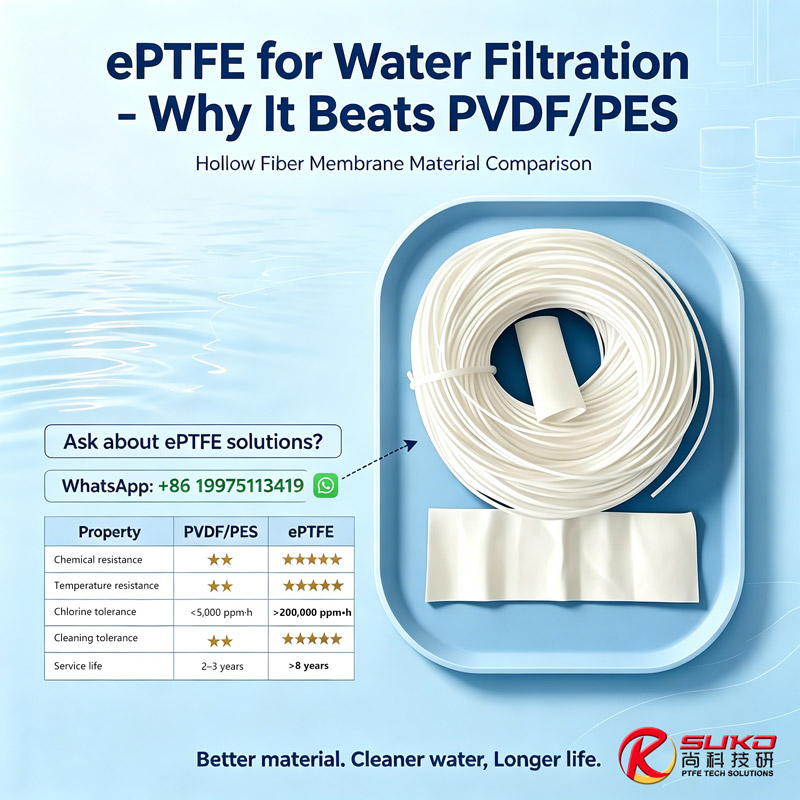
Below is a comparison based on actual operational data (both ultrafiltration membranes with 0.03–0.1 µm pore size):
| Parameter | PVDF Hollow Fiber | ePTFE Hollow Fiber |
|---|---|---|
| Chlorine tolerance | ≤500 ppm intermittent; degrades with long-term use | >5000 ppm continuous; no effect |
| pH range | 2–11 (short term) | 0–14 (long term) |
| Maximum continuous temperature | 40 °C (some grades 60 °C) | 80 °C (can be higher) |
| Ozone / hydrogen peroxide resistance | Poor | Excellent |
| Typical replacement interval | 2–3 years | 8–12 years (3–4× longer) |
| Flux stability over time | Declines yearly (due to pore structure collapse) | Stable for many years |
| Chemical cleaning intensity | Limited (strong oxidants cannot be used) | No restrictions |
| Fiber breakage risk | Moderate to high (after aging) | Very low |
Conclusion: ePTFE completely outperforms PVDF in chemical resistance, temperature tolerance, and service life.
Question 5: ePTFE sounds great, but is it extremely expensive? What is the total cost of ownership?
This is a critical question.
Upfront cost: ePTFE membrane typically costs 2–3 times more than PVDF per square meter. Many customers walk away when they see the initial quote.
However, total cost of ownership (TCO) tells a different story.
Consider a 1000 m³/day water treatment project:
| Cost Item | PVDF Solution | ePTFE Solution |
|---|---|---|
| Initial membrane investment | 100 (baseline) | ~250 |
| Number of replacements over 10 years | 3–4 times | 0–1 time |
| Cumulative membrane cost over 10 years | 100 + 3×100 = 400 | 250 + 0 = 250 |
| Labor and downtime for changeouts | High (plant shutdowns every 2–3 years) | Very low (almost none over a decade) |
| Chemical cleaning effectiveness | Limited – cannot use strong oxidants | Unlimited – more effective cleaning |
| 10‑year total cost of ownership | ~500–600 | ~300–350 |
Over a 10‑year horizon, ePTFE actually saves money, while providing more stable water quality and much lower maintenance headaches.
Do not look at price per square meter – look at cost per cubic meter of treated water.
Question 6: My operating conditions are challenging (oil, chlorine, high temperature). Which material should I use?
A practical guide:
- Mild conditions (no chlorine, ambient temperature, pH 6–9) – PVDF or PES can work. Choose PVDF if budget is the primary concern.
- Chlorine present (tap water, cooling tower blowdown, disinfected wastewater) – ePTFE is the only reliable choice. PVDF will degrade rapidly.
- Strong acids or alkalis (chemical wastewater, electroplating, hydrometallurgy) – ePTFE is the only choice.
- Oil or organic fouling – ePTFE has lower surface energy and better oil resistance than PVDF.
- High temperature (>50 °C) – ePTFE has a clear advantage.
- Want to avoid membrane replacement for >5 years – You must choose ePTFE.
In short: If your application involves oxidants, extreme pH, high temperature, or long service life – ePTFE is the correct answer.
Question 7: I want to use ePTFE, but most suppliers are expensive international brands. Is there a reliable and cost‑competitive Chinese supplier?
This is exactly why Suko exists.
Most ePTFE membrane suppliers only do assembly – they import membrane fibers and pot them into modules. They have no control over the quality of the fiber itself, and costs remain high.
Suko does it completely differently:
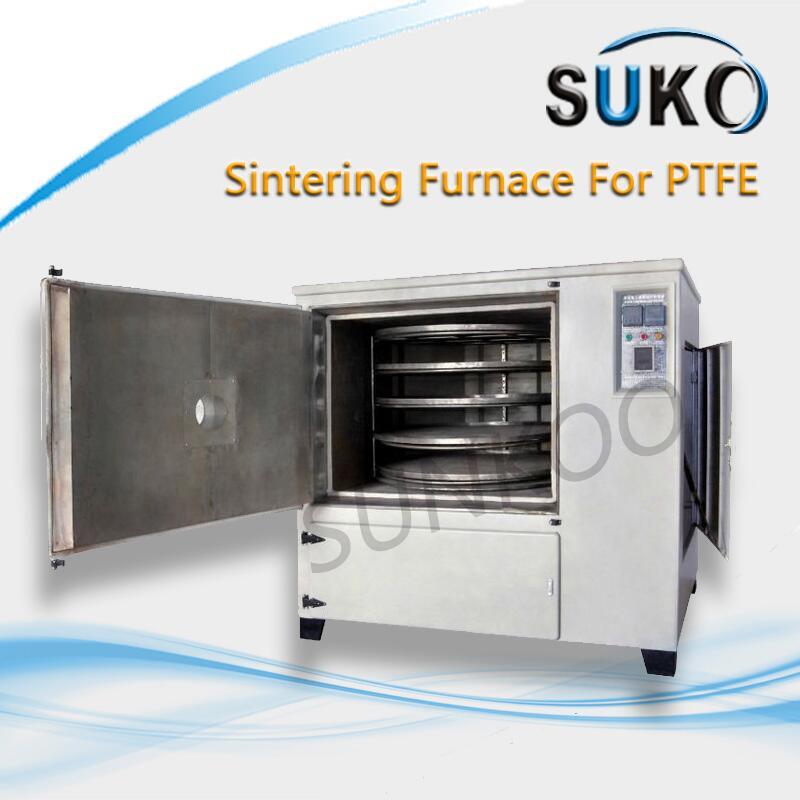
- We start from PTFE resin and develop our own complete process: paste extrusion, drying, stretching, and sintering.
- We design and build our own production machines – every line is purpose‑built for ePTFE hollow fiber manufacturing, not generic equipment.
- We supply both ePTFE fiber and finished membrane modules – full quality control from raw material to final product.
The result: Suko’s ePTFE hollow fiber membranes deliver performance comparable to top international brands, at 30–50% lower cost. We also offer custom development for your specific pore size, wall thickness, fiber ID/OD, and porosity requirements.
Summary: Which membrane material should you choose?
| Your Core Requirement | Recommended Material |
|---|---|
| Lowest initial budget, mild conditions | PVDF |
| Want 5–10 years without replacement; lower long‑term O&M cost | ePTFE |
| Feed contains chlorine, ozone, hydrogen peroxide or other oxidants | ePTFE |
| Extreme pH (<2 or >12) | ePTFE |
| Water temperature >40 °C | ePTFE |
| Frequent chemical cleaning (multiple times per week) | ePTFE |
| Extremely stable water quality required (semiconductor, pharma) | ePTFE |
One sentence: ePTFE is the highest‑performing material; PVDF is just a baseline. If you are unhappy with the service life of your current PVDF membranes, or you are designing a system that needs long‑term reliability, we strongly recommend evaluating ePTFE.
Suko’s technical team can provide membrane material comparison tests and total cost of ownership analysis based on your specific water quality – helping you make the most economical choice.
Better material. Cleaner water. Longer life.
– Suko
Post time: Jun-12-2026