

The Seven Hidden Costs of Conventional Hose
Most procurement teams evaluate hose on purchase price. Plant engineers and maintenance managers pay the real price — in downtime, contamination events, and accumulated replacement labor. Here are the failures that drive experienced operators to switch permanently to PTFE hose.
1. Corrosion-Induced Cracking in Aggressive Media
Rubber and stainless steel overbraid hose degrade predictably in strong acids, concentrated alkalis, and chlorinated solvents. The inner lining embrittles, develops micro-cracks, and eventually fails — often catastrophically. In chemical processing environments, a typical rubber hose lasts months, not years. A properly specified PTFE hose eliminates this failure mode entirely because PTFE is universally inert to virtually all industrial chemicals.
2. Temperature Extremes That Soften or Shatter
Most elastomeric hoses have a functional window of roughly -30C to 120C. Push beyond either boundary, and the failure mode is swift: low temperatures make the material glass-brittle; high temperatures soften it until the hose balloons and bursts. PTFE hose and PTFE tubing products maintain structural integrity from -196C to +260C, covering cryogenic transfer and superheated process lines without compromise.
3. Extractables That Contaminate Product
Pharmaceutical and food processing manufacturers face a contamination risk that chemical plants do not: organic compounds leaching from the hose material into the product stream. Plasticizers and processing aids from rubber compounds migrate into high-purity water or active pharmaceutical ingredients. One pharmaceutical facility calculated the cost of a single batch hold event at approximately $180,000. Switching to medical PTFE hose – a material with virtually zero extractable content – eliminates this risk entirely. For sterile processing environments, thin wall PTFE tube configurations provide the same purity assurance in compact installations.
4. Biofilm Formation in Warm, Wet Environments
The inner surface of a rubber hose is microscopically rough and slightly porous – an ideal substrate for bacterial colonization. In pharmaceutical water systems, biofilm establishes itself and becomes extraordinarily difficult to eradicate with CIP protocols. PTFE hose, with its non-porous, hydrophobic surface, denies bacteria the mechanical adhesion they require, making it the material of choice for WFI loops and sterile transfer.
5. Leak-Prone Multi-Joint Assemblies
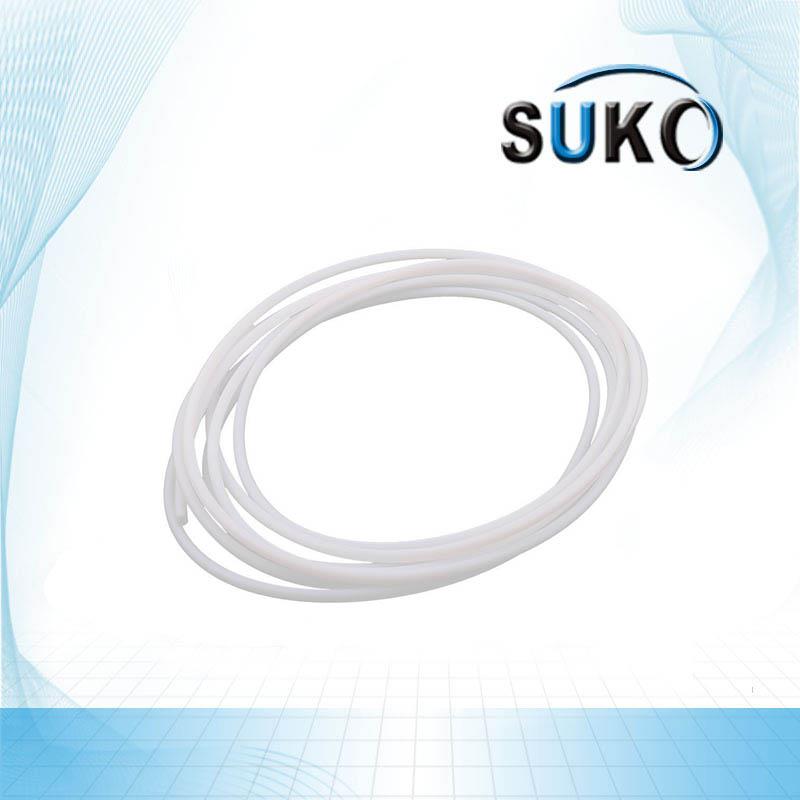
Complex piping systems with multiple elbows and adapters create a multiplication of potential leak points. Every joint requires inspection, every connection is a potential failure site. A continuous PTFE hose assembly – whether smooth bore PTFE tubing or a PTFE corrugated hose configuration – can often replace an entire rigid pipe-and-joint network, reducing leak paths in a single installation decision.
6. The Accumulated Annual Replacement Cost
Corrosive media environments consume traditional hoses at a predictable rate. When you tally material costs, maintenance labor, production downtime, and disposal fees across a full year, the total is staggering. Customers who switch to SUKO PTFE hose consistently report replacement cost reductions of 60-80%. The right chemical resistant hose pays for itself through eliminated replacements alone.
7. Energy Loss Through Flow Resistance
Internal surface roughness in traditional piping creates turbulent flow, increasing pressure drop across the system. PTFE hose and PTFE tubing feature a coefficient of friction of just 0.04 – the lowest of any known solid. The resulting near-laminar flow minimizes pressure drop and reduces pump energy consumption measurably over the operating life of the installation.
What Makes SUKO PTFE Hose Different: The Manufacturing Advantage
Most PTFE hose suppliers purchase extruded PTFE tubing from third-party manufacturers and assemble finished products. Their quality is limited by their supplier’s process control. SUKO takes a fundamentally different approach: we manufacture the extrusion equipment that produces our PTFE hose and PTFE tubing.
Vertical Integration from Paste Extrusion
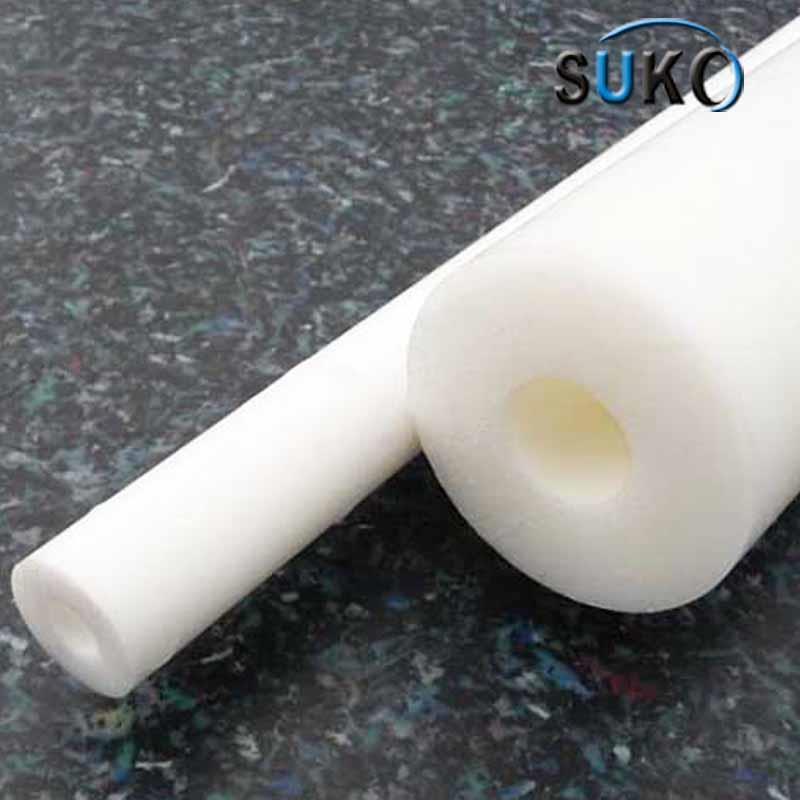
Our PTFE Hose Paste Extruder machines are engineered in-house, giving us absolute control over the critical parameters that determine PTFE hose performance – material density distribution, wall thickness uniformity, and inner surface finish. This is not a theoretical advantage. When a customer requires a non-standard outer diameter for their PTFE hose, an unusual wall-to-diameter ratio for specialized PTFE tubing, or a specific density profile for a unique pressure requirement, we can engineer the solution at the extrusion stage rather than asking the customer to compromise on a catalog specification.
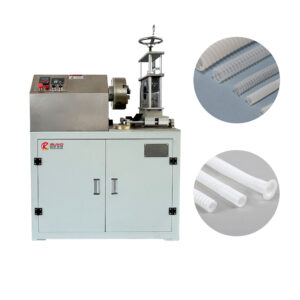
For applications requiring tight bend radii without kinking, our PTFE Corrugated Machine technology produces PTFE corrugated hose with helical and annular profiles, maintaining uniform wall thickness throughout every convolution. Thin spots at bend points – a common failure mode in poorly manufactured PTFE corrugated hose – are eliminated through precise process control.
Core Manufacturing Specifications for SUKO PTFE Hose
| Parameter | Specification |
| Outer Diameter Range | 0.5 – 70 mm |
| Wall Thickness Range | 0.025 – 2 mm |
| Line Speed | 0 – 20 m/min |
| Sintering Temperature | 500C |
| Pressure System Type | Hydraulic |
| Electrical | 380V, 50Hz, 3-Phase |
| PTFE Tubing Configurations | Thin-wall, capillary, micro-porous, dual-layer, multi-lumen, lined tubing |
Performance Properties of SUKO PTFE Hose and PTFE Tubing
| Property | Value |
| Service Temperature Range | -196C to +260C |
| Coefficient of Friction | 0.04 (lowest of any solid material) |
| Chemical Resistance | Universal – inert to strong acids, alkalis, oxidizers, and organic solvents |
| Standard PTFE Hose Pressure Rating | 10 – 14 bar |
| Reinforced (Braided) PTFE Hose Rating | 70+ bar |
| Compliance Options | FDA-compliant grades for food and pharmaceutical contact |
Product Configurations for Every Application
Smooth Bore PTFE Hose
The standard PTFE hose configuration for maximum flow rate and minimum pressure drop. The mirror-smooth inner surface resists particulate buildup and cleans fully during CIP cycles. Preferred for sanitary transfer, WFI distribution, and chemical dosing where flow characteristics and cleanability are paramount.
PTFE Corrugated Hose
Helical or annular convolutions provide PTFE flexible hose characteristics without kinking. When installation space is tight, equipment cabinetry demands compact routing, or the PTFE hose must absorb frequent movement and vibration, a PTFE corrugated hose solves routing challenges that rigid or smooth-bore PTFE tubing cannot.
Stainless Steel Braided PTFE Hose
A stainless steel over-braid applied to the PTFE hose core multiplies pressure capacity significantly. This reinforced chemical resistant hose configuration achieves 70+ bar working pressure ratings, making it the standard choice for high-pressure chemical injection and hydraulic systems.
Thin Wall PTFE Tube
Wall thicknesses as low as 0.025 mm maximize thermal transfer rates and minimize weight. Thin wall PTFE tube products are specified for instrumentation impulse lines, sample transport, and heat exchanger applications where thermal response time is critical. Our medical PTFE hose configurations often utilize thin wall PTFE tube designs for compact, high-purity installations.
Proof in Practice: The Korean Chemical Processing Case
A chemical processing facility in South Korea faced a persistent problem with their high-purity water transfer lines. Rubber hoses required replacement four times per year. Mineral deposits and biological fouling compromised water quality between replacements, creating a rolling compliance risk. Each unplanned replacement of their existing hose disrupted production scheduling and consumed maintenance resources.
The facility switched to SUKO PTFE hose assemblies.
Three years later, the same PTFE hose assemblies remain in service with zero replacements. The biofilm problem – driven by the rough, porous inner surface of the previous rubber hose – has been completely eliminated. The total investment in SUKO PTFE hose, including initial purchase and installation, achieved full payback in 11 months through avoided material costs, reduced maintenance labor, and recovered production uptime.
This result is consistent with what we observe across our installed base of PTFE hose and PTFE tubing customers: a 60-80% reduction in total hose-related costs when manufacturers make the permanent switch. Whether the application calls for standard PTFE hose, a flexible PTFE corrugated hose, or specialty thin wall PTFE tube products, the economic case is compelling.
19 Years of Engineering Authority
SUKO Polymer Machine Tech was established in 2006 in Changzhou, China. Our founding vision – Let all fluoroplastic factories use high-efficiency and intelligent equipment – reflects a conviction that PTFE hose manufacturing quality begins with machine quality.
We specialize in PTFE processing equipment: rod and tube extruders, molding machines, sintering furnaces, and gasket production lines. Every PTFE hose and length of PTFE tubing we produce is the direct result of this machine-building expertise. We understand PTFE processing at the molecular level because we design the equipment that controls every parameter.
Our products are exported to over 40 countries, including the United States, UAE, Saudi Arabia, South Korea, India, Russia, Philippines, Indonesia, and Malaysia. Customer feedback consistently highlights two advantages in our PTFE hose and PTFE tubing products: high output rates and low energy consumption – the direct result of equipment engineered by people who understand both the material and the production economics of fluoropolymer processing.
A customer in Singapore purchased a complete PTFE rod extrusion line and reported positive results. A United States customer evaluated our technology against competing systems and selected SUKO based on measurable advantages in production efficiency. These machine customers experience the same engineering quality that goes into every PTFE hose and length of PTFE tubing we manufacture.
Trust Built on Transparency and Verification
We operate on four core values: Innovation, Openness, Integrity, and Win-Win. These translate into practices that customers can verify when they source PTFE hose from SUKO.
Pre-Delivery Testing
Every machine and every PTFE hose production batch undergoes systematic quality verification before shipment. Hydrostatic pressure testing confirms PTFE hose pressure integrity. Laser dimensional inspection verifies OD, ID, and wall thickness of all PTFE tubing against specification. Full visual inspection under controlled lighting catches surface defects before any PTFE hose leaves our facility.
Factory Transparency
We maintain detailed workshop documentation, including 28 factory floor photographs showing our PTFE hose extrusion lines, sintering furnaces, and quality control stations. Customers are welcome to visit our facility for technical audits.
Batch Traceability
Material lot numbers, production dates, process parameters, and test results are recorded for every PTFE hose and PTFE tubing shipment. When a customer reorders a PTFE hose specification, we can reproduce it exactly.
Global Repeat Orders
The strongest validation of our PTFE hose quality is customer behavior: they reorder. Across 40+ countries, manufacturers who try SUKO PTFE hose and PTFE tubing return for their next requirement.
Frequently Asked Questions About SUKO PTFE Hose
1. What pressure can PTFE hose handle?
Standard smooth-bore PTFE hose is rated for 10-14 bar working pressure at ambient temperature. Stainless steel braided PTFE hose assemblies extend this significantly, with reinforced chemical resistant hose configurations achieving working pressures of 70 bar and above. Pressure ratings are temperature-dependent; we provide full pressure-temperature derating curves for all PTFE hose products in our technical datasheets.
2. Can PTFE hose be used for steam service?
Yes, with defined limitations. Standard PTFE hose handles saturated steam service up to approximately 150C. For higher-temperature steam applications, we can engineer composite PTFE hose constructions that maintain integrity at elevated temperatures. Contact our engineering team with your specific steam conditions for a proper PTFE hose recommendation.
3. What end fitting options are available for PTFE hose?
We supply PTFE hose assemblies with flanged connections, compression fittings, sanitary tri-clamp connections, and quick-disconnect couplings. Custom fittings for PTFE hose and PTFE tubing are available for volume orders.
4. Is there a minimum order quantity for PTFE hose?
Standard catalog PTFE hose sizes and configurations ship from a single piece. Custom PTFE hose profiles, special color compounds, and non-standard dimensional specifications typically require a minimum production quantity of 500 meters of PTFE tubing.
5. How should PTFE hose be stored?
PTFE hose is inherently stable and does not degrade under normal warehouse conditions. Store your PTFE hose and PTFE tubing in a dry environment away from direct sunlight. Unlike rubber, PTFE hose contains no plasticizers or volatile compounds, so there is no shelf-life limitation. Properly stored PTFE hose will perform identically to newly manufactured product even after years in inventory.
If you are managing a fluid transfer system where corrosion, contamination, or frequent replacement cycles are driving up your operating costs, the solution is a material change to PTFE hose – and SUKO has the engineering expertise to make that change successful.
Contact our application engineering team to discuss your operating conditions, request a pressure-temperature datasheet for your PTFE hose application, or arrange a technical consultation. We ship PTFE hose and PTFE tubing to over 40 countries with full documentation and quality certification.
SUKO PTFE Hose – Built on Machines We Engineer. Proven in 40+ Countries.

Post time: Jun-04-2026